Cedar Shake Roof Cleaning and Restoration
Many homeowners are frustrated with the way their cedar shake roof looks Builders and Realtors do not tell you cedar shake shingles need to be maintained. The cedar shake shingles are made up of two components. The felt and the cedar shake shingle. The shingle protects the felt and the felt protects the roof. If you maintain the shingle you protect the integrity of your roof. Moss, Algae, Lichen and Fungi infestation will hold water in your cedar shingle and deteriorate the cedar shingle causing them to buckle, split, and rot the wood. Our non-pressure service cleans and protects and preserves your roof extending the life of your roof. Cedar Shake on its own will not decay. Cedar Shake is an extremely durable material even under adverse conditions, but its useful life depends upon the environment and rather or not the roof is maintained. High humidity, UV exposure, shade trees, slope of roof and the age of the wood shake shingle all contribute to the need for cleaning and restoring wood shake shingles. Pine needles, branches, leaves and dirt will affect the cedar shake lifespan. Infestations of Moss, mold, lichen, white and brown rot fungi retain moisture and cause water to back up the roof enough to run over the top of the shingles and will damage your wood roof.
Cedar Shake Roof Maintenance and Roof Washing
A cedar shake roof adds natural beauty, character, and insulation to a home, but it requires specialized care. Unlike asphalt shingles or metal roofing, cedar is an organic material that reacts to moisture, sunlight, temperature changes, and biological growth. Without regular maintenance, cedar shakes can absorb excess water, develop moss and algae, split, curl, loosen, and deteriorate prematurely.
Professional cedar shake roof maintenance and gentle roof washing help protect the wood, preserve the roof’s appearance, and extend its useful life. The goal is not simply to make the roof look cleaner. Proper care removes damaging buildup, improves drainage and drying, and allows small problems to be addressed before they lead to leaks or expensive repairs.
Why Cedar Shake Roofs Need Regular Maintenance
Cedar naturally contains oils and compounds that help it resist moisture, insects, and decay. Over time, however, exposure to ultraviolet light, rain, snow, wind, debris, and temperature fluctuations gradually reduces that natural protection.
Because every cedar shake is made from real wood, each piece may weather differently. Some shakes may remain flat and secure, while others begin to split, cup, curl, or soften. Routine inspections and maintenance identify these changes early and help keep the entire roof system functioning as intended.
Important maintenance tasks typically include:
- Inspecting for damaged shakes: Cracked, split, curled, loose, or missing shakes can expose the underlayment and create potential entry points for water.
- Removing leaves and debris: Organic debris holds moisture against the cedar and can obstruct valleys, gutters, and drainage paths.
- Checking flashings and penetrations: Chimneys, skylights, vents, pipes, and roof-to-wall transitions are common areas for leaks.
- Monitoring moss, algae, and lichen: Biological growth can retain moisture and interfere with the roof’s ability to dry.
- Maintaining gutters and downspouts: Clear drainage systems help move water away from the roof, fascia, siding, and foundation.
- Evaluating ventilation: Adequate attic ventilation helps reduce heat and moisture buildup beneath the roof.
How Moisture Damages Cedar Shakes
Cedar performs best when it can absorb and release moisture naturally. Problems develop when sections of the roof remain damp for extended periods. Shade, overhanging branches, poor airflow, clogged gutters, accumulated debris, and moss growth can all slow the drying process.
Repeated wetting and drying may cause the shakes to expand and contract. Over time, this movement can contribute to checking, splitting, warping, cupping, and loosened fasteners. Persistent moisture can also encourage fungal decay, particularly in areas where debris collects or roof surfaces receive limited sunlight.
A maintenance program improves the roof’s ability to shed water and dry evenly. This is essential because a clean cedar roof is not merely more attractive – it is better able to manage moisture.
Why Roof Washing Is Important
Roof washing removes moss, algae, mildew, dirt, pollen, stains, and organic buildup from the surface of the cedar. These contaminants can affect both the appearance and performance of the roof.
Moss is especially concerning because it acts like a sponge. It absorbs water, keeps the wood damp, and can grow between or underneath shakes. As moss expands, it may shake edges and create spaces where wind-driven rain can enter. Lichen can attach firmly to the wood, while algae and mildew often produce dark streaks or discoloration.
Proper roof washing can provide several benefits:
- Reduces moisture retention: Removing moss and debris allows the shakes to dry more efficiently after rain.
- Helps slow biological growth: Appropriate cleaning removes established growth and reduces the organic material that supports regrowth.
- Improves roof appearance: Washing can reduce dark stains, uneven discoloration, and neglected-looking buildup.
- Supports accurate inspections: A clean surface makes it easier to identify cracks, decay, loose shakes, exposed fasteners, and flashing defects.
- Protects drainage pathways: Cleaning helps prevent valleys, gutters, and shake joints from becoming blocked.
- May extend service life: By reducing prolonged dampness and addressing growth early, proper washing can help delay avoidable deterioration.
Cedar Roof Washing Is Not the Same as Pressure Washing
Cedar shakes should not be cleaned with the same aggressive methods commonly used on concrete, brick, or other durable exterior surfaces. Excessive water pressure can erode the soft wood fibers, remove healthy surface material, force water beneath the shakes, loosen fasteners, and leave permanent marks.
Improper pressure washing may make the roof look lighter temporarily, but that appearance can result from stripping away weathered wood fibers rather than safely removing contamination. It can also create a rough, fuzzy surface that traps debris and weathers unevenly.
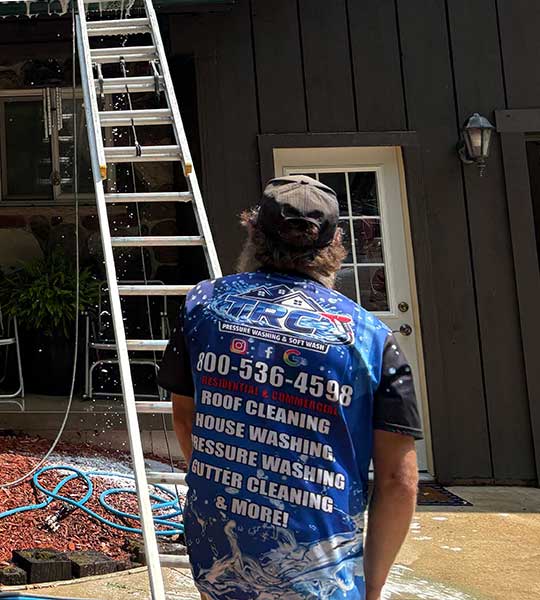
Power washing can seriously damage a cedar roof. Aggressive power washing in combination with strong cleaning solutions can damage wood roofs, particularly those made of cedar or redwood. It’s a good idea to have a professional clean your roof like TRC Pressure Washing. We use a Soft-Wash System to clean your roof and we do it from ladders, so we do not get on your roof.
A suitable cedar roof cleaning method generally uses:
- Controlled, low-pressure application rather than forceful blasting.
- Cedar-compatible cleaning solutions selected for the type and severity of growth.
- Careful runoff management to protect siding, landscaping, gutters, and nearby surfaces.
- Gentle rinsing or removal methods that avoid unnecessary disturbance of the wood.
- A detailed inspection before and after cleaning to identify fragile or damaged areas.
The exact process should be based on the roof’s age, condition, pitch, amount of growth, surrounding vegetation, and previous maintenance history. Severely deteriorated shakes may need repair or replacement before cleaning begins.
The Importance of Removing Moss, Algae, and Lichen
Biological growth is more than a cosmetic concern. It often indicates that part of the roof is staying damp for too long.
Moss retains substantial moisture and can spread into gaps between shakes. Its root-like structures may cling to the surface and make careless removal damaging.
Algae often appears as dark streaks or patches. Although it may be thinner than moss, it can contribute to staining and may signal consistently damp conditions.
Lichen forms a strong bond with the wood and should be treated carefully. Aggressive scraping can remove cedar fibers along with the growth.
Safe treatment focuses on controlling the organisms without causing more damage than the growth itself. Results may be gradual, especially with thick moss or established lichen. Forcing immediate removal can harm the cedar.
Cladonia Cristatella commonly known as the British Soldiers Lichen. The little red caps that resemble the red hats worn by British troops give the Lichen its common name. British Soldiers is the hardest of all types of Lichen to remove from Cedar Shake because it roots grow deep into the cells of the cedar Shake.
Maintenance Helps Prevent Costly Repairs
Small defects in a cedar roof can develop into larger problems if they are not found promptly. One split shake may allow water to reach the layers beneath it. A clogged valley may redirect water under adjacent shakes. Damaged flashing around a chimney can cause hidden moisture intrusion long before stains appear indoors.
Routine maintenance can uncover:
- Split, broken, or missing shakes.
- Loose or exposed fasteners.
- Worn ridge and hip components.
- Deteriorated flashing or sealant.
- Blocked valleys and gutters.
- Soft or decayed wood.
- Signs of animal or insect activity.
- Water staining in the attic or beneath the roof deck.
Early repairs are generally less disruptive and less expensive than replacing large areas of damaged roofing, decking, insulation, or interior finishes.
Preserving the Natural Appearance of Cedar
Cedar changes color as it ages. Fresh cedar may appear golden, reddish-brown, or amber, while naturally weathered cedar often develops a silver-gray tone. This color change does not automatically indicate failure.
However, uneven black staining, green moss, thick lichen, soft wood, and heavy debris can signal conditions that deserve attention. Professional cleaning helps distinguish harmless weathering from buildup that may affect roof performance.
The objective should not be to make an older roof look artificially new. Instead, cleaning should restore a more uniform appearance while preserving as much sound wood as possible.
How Often Should a Cedar Shake Roof Be Maintained?
There is no universal schedule for every property. The appropriate frequency depends on the home’s environment and the roof’s condition. Roofs surrounded by trees, exposed to frequent rain, or located in shaded areas often need attention more frequently than roofs with strong sunlight and open airflow.
A practical maintenance plan may include:
- Visual checks throughout the year, especially after strong winds, heavy rain, snow, or falling branches.
- Professional inspections at regular intervals and whenever signs of damage appear.
- Prompt debris removal before leaves, needles, and twigs begin retaining moisture.
- Roof washing when biological growth becomes established, rather than waiting for thick moss coverage.
- Gutter cleaning as needed, particularly during seasons of heavy leaf or needle fall.
Maintenance should be based on actual roof conditions rather than an inflexible calendar.
Signs Your Cedar Roof May Need Cleaning or Maintenance
Schedule an inspection when you notice:
- Green moss or dark algae staining.
- Lichen patches attached to the shakes.
- Leaves, pine needles, or branches collecting on the roof.
- Shakes that are cracked, curled, loose, or missing.
- Water overflowing from gutters.
- Damp areas that dry much more slowly than the rest of the roof.
- Visible deterioration around chimneys, vents, valleys, or skylights.
- Interior water stains, musty odors, or damp attic materials.
- An uneven or heavily neglected appearance.
Avoid walking on the roof to investigate these conditions. Cedar shakes can become slippery when wet, and aged or deteriorated pieces may crack under foot traffic.
Why Professional Cedar Roof Care Matters
Cedar roofing requires knowledge of wood behavior, roofing construction, cleaning chemistry, fall protection, and water management. An experienced contractor can adjust the process to the condition of the roof instead of applying a one-method-fits-all treatment.
Professional service also reduces the risks associated with steep slopes, fragile shakes, wet surfaces, cleaning solutions, and high-access work. Just as importantly, a qualified specialist can recognize when a roof should not be washed because it first needs repairs or has reached the end of its serviceable life.
TRC Pressure Washing cleans and restores all wood species and types used in roofing to include: Tapersawn Shakes, Cedar Shakes, Western Redcedar, Yellow Cedar, Redwood Shingles, Handsplit Shakes, Tapersplit Shakes, and Western Cedar Shingles.
Why Worry About A Dirty Roof?
Because a clean and preserved roof looks a lot better than a re-roofers bill!
The worst thing to do, however, is to do nothing at all!
Protect Your Cedar Roof With Preventive Care
A cedar shake roof is a significant investment. Regular inspections, debris removal, minor repairs, gutter maintenance, and careful roof washing work together to protect that investment.
Waiting until moss is thick, shakes are visibly decayed, or leaks appear often results in more extensive work. Preventive maintenance addresses the conditions that contribute to deterioration before they become structural problems.
With the right care, a cedar shake roof can retain its distinctive beauty and continue protecting the home for many years. The key is to use gentle, cedar-appropriate methods and address moisture, growth, and damage early rather than relying on aggressive cleaning after deterioration has already occurred.!